 Florida Legal Information Blog


If you have just been in a car accident in Florida, the first things to focus on are your health, documenting what happened, and preserving the information that may matter later. Most people are not thinking about insurance statutes or legal claims at the scene of a crash. They are thinking about whether everyone is okay, whether the car can be driven, how they are getting home, and what happens next.
Those immediate concerns matter. But the first few hours and days after an accident can also affect how clearly the facts can be reconstructed later, especially if injuries become serious or the insurance companies disagree about what happened.
What Should I Do Immediately After the Accident?
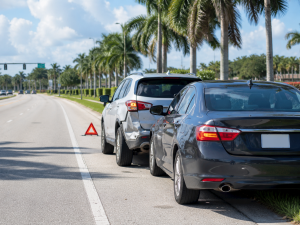
First, make sure you and everyone else are safe. If someone may be injured, call 911 and request medical assistance. If the vehicles can safely be moved out of active traffic, do so when appropriate. Law enforcement can identify the drivers and vehicles involved, obtain insurance information, speak with witnesses, and document the crash.
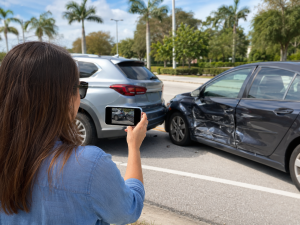
A crash report can become an important source of information, but it is not necessarily the final determination of legal responsibility. If you are physically able to do so safely, use your phone to photograph or video the scene before things change.
Do not take only one close-up photograph of the damage to your vehicle. Photograph all vehicles involved, the damage from several angles, the roadway, traffic signals, signs, debris, skid marks, vehicle positions if they have not already been moved, weather conditions, and anything else that may help someone understand the scene later.
If there are witnesses, get their names and contact information. An independent witness who has no connection to either driver may later become extremely important if the drivers disagree about what occurred.
What If I Feel Fine at the Scene but Start Hurting Later?
Not every injury is immediately obvious. After a collision, adrenaline and stress can temporarily mask pain, and symptoms involving the neck, back, head, shoulders, or other parts of the body may become more noticeable later that day or over the next several days.
That does not mean every person involved in an accident needs to take an ambulance to the emergency room. It does mean that legitimate symptoms should not simply be ignored. If you are hurting, experiencing headaches, dizziness, numbness, weakness, significant soreness, or other concerning symptoms, obtain appropriate medical care.
Florida also has an important insurance rule concerning medical treatment. Under Florida Statute § 627.736, a person seeking Personal Injury Protection medical benefits generally must receive initial medical services and care within 14 days after the motor vehicle accident. Fourteen days may sound like plenty of time, but it can pass quickly when someone is dealing with transportation problems, work, family responsibilities, and the aftermath of a collision.
What Is PIP and Why Does It Matter?
Personal Injury Protection, commonly called PIP, is part of Florida’s automobile insurance system. It generally provides certain medical and disability benefits under your own automobile policy regardless of who caused the crash.
That sometimes surprises people. A person may understandably ask why his or her own insurance is involved when another driver caused the accident. The answer is that Florida’s automobile insurance system requires PIP coverage to operate in this way for qualifying losses.
PIP, however, is only one part of a potential injury claim. Depending on the circumstances, there may also be bodily injury liability insurance, uninsured or underinsured motorist coverage, health insurance, medical payment coverage, or other policies that may apply.
Who Actually Pays If the Other Driver Caused the Accident?
This is where a seemingly simple car accident can become more complicated. The driver who caused the collision may not necessarily be the only person or entity whose insurance matters.
The vehicle may belong to someone else. The driver may have been working at the time of the accident. A commercial vehicle may be involved. More than one driver may share responsibility. The at-fault driver may also have very little insurance, or possibly no bodily injury coverage at all.
For that reason, one of the most important questions in a serious accident case is not simply who caused the crash. It is also what insurance coverage exists, who may be legally responsible, and whether there are additional sources of recovery that are not obvious from the police report.
That question becomes especially important when someone has been hospitalized, needs surgery, cannot work, has suffered a permanent injury, or is facing substantial future medical care.
Who Pays for My Car and Other Immediate Expenses?
Property damage is separate from the personal injury portion of a claim. Take photographs of the vehicle before repairs whenever possible, and keep towing receipts, rental-car expenses, repair estimates, photographs, and correspondence from the insurance companies.
If personal property inside the vehicle was damaged, document that as well. People dealing with pain and medical treatment often focus entirely on their injuries and forget about smaller expenses that add up over time.
Keeping a simple file with accident-related receipts, bills, photographs, emails, and letters can make the process much easier later. If you miss work because of your injuries, keep documentation of that too.
Should I Give the Insurance Company a Recorded Statement?
If you were injured in the accident, do not feel pressured to give a recorded statement immediately. Insurance companies often begin calling very quickly, sometimes before you fully understand your injuries, before you have completed medical evaluations, or while you are still dealing with pain, medication, transportation problems, and the disruption caused by the crash.
If you have been injured, it is usually better to speak with an attorney first. At the Law Office of Roger P. Foley, P.A., the initial consultation is free. We can review what happened, explain what the insurance company is looking for, and help guide the process before you say something that could later be taken out of context or used to minimize your claim.
If we represent you, we can deal directly with the insurance companies and help make sure the claim is handled properly while you focus on your medical treatment and recovery. The point is not that every recorded statement is dangerous or that every accident requires a lawyer. The point is that if you are injured and may have a significant claim, there is no reason to rush into an insurance interview before you understand your rights and the purpose of the questions being asked.
What If the Insurance Company Says the Accident Was Partly My Fault?
Fault is not always all or nothing. Florida follows a comparative-fault system, which means responsibility can sometimes be divided among the people involved.
For example, if a person’s damages were $100,000 and that person was found 20 percent responsible for the accident, the amount recoverable could be reduced based on that percentage of fault. Florida Statute § 768.81 also currently provides that, in negligence cases to which the statute applies, a person found more than 50 percent at fault for his or her own harm may be barred from recovering damages.
That is one reason evidence matters. Photographs, witnesses, traffic-camera footage, surveillance video, vehicle data, physical evidence, and statements made at the scene can all affect how fault is ultimately evaluated. An insurance company’s first opinion about who caused the crash is not necessarily the final answer.
What Evidence Should I Preserve?
Evidence can disappear quickly after an accident. Vehicles are repaired or destroyed, surveillance footage may be overwritten, witnesses can become difficult to locate, and memories become less precise over time.
In a serious case, important evidence may exist that an injured person would not necessarily know to request. Depending on the accident, that could include traffic-camera footage, surveillance video from nearby businesses, vehicle event data, cell-phone records, 911 recordings, photographs taken by witnesses, employment records, commercial driving information, electronic logs, maintenance records, or inspection records.
This becomes especially important in commercial-truck crashes, rideshare accidents, catastrophic-injury cases, and accidents where responsibility is disputed. Preserving the right evidence early can make a significant difference in determining what actually happened.
.
What Are Some Common Mistakes After a Car Accident?
Some of the biggest problems after an accident come from simple mistakes rather than complicated legal issues. People sometimes guess about facts they do not know, minimize injuries because they do not want to complain, throw away documents, fail to get witness information, or sign paperwork they do not fully understand.
Social media can also create unnecessary problems. A photograph or casual comment posted without much thought can later be taken out of context. The same is true of statements such as “I’m fine,” which someone may say simply because they survived the accident and are trying to reassure a family member.
The safest approach is simple: be truthful, be accurate, keep good records, and do not make important decisions before you understand what they mean.
How Long Do I Have to Bring a Florida Car Accident Claim?
Florida law imposes deadlines on negligence cases. Florida Statute § 95.11 currently provides a two-year statute of limitations for an action founded on negligence, although different claims and factual circumstances can involve different deadlines.
There is also a practical deadline that can matter long before the statute of limitations expires: the time before evidence disappears. A case investigated days after an accident may look very different from the same case investigated months or years later.
Waiting until a legal deadline is approaching is rarely a good strategy in a serious injury case.
When Does It Make Sense to Speak With a Lawyer?
Not every minor car accident requires an attorney. If no one is hurt and the only issue is a small amount of property damage, legal representation may never be necessary.
The situation changes when the injuries or insurance issues become significant. It may make sense to have the case reviewed if you were hospitalized, may need surgery, have missed substantial time from work, have suffered a permanent injury, the insurance company is disputing fault, the other driver has little or no insurance, a commercial vehicle was involved, or more than one person or company may be responsible.
A serious accident case may involve identifying all responsible parties, determining every available insurance policy, preserving evidence before it disappears, reviewing medical records, evaluating lost income and future care, and making sure important deadlines are not missed.
Insurance companies handle accident claims every day. They know their policies, their procedures, and the information they want from an injured person. Most people involved in a serious accident are learning the system for the first time while also trying to recover physically and keep their lives together.
There is nothing wrong with getting help understanding that process.
Frequently Asked Questions About Florida Car Accidents
Do I Have to Go to the Hospital After a Florida Car Accident?
No. There is no rule that every person involved in a car accident must go to the hospital. The more important question is whether you are injured and what level of medical care is appropriate.
Some injuries are obvious and require emergency treatment. Others may not become apparent until later. If you develop pain, headaches, dizziness, numbness, weakness, or other symptoms after the crash, do not ignore them simply because you felt relatively normal at the scene.
Florida’s PIP law also generally requires initial medical services and care within 14 days of the accident for PIP medical benefits to apply. If you are injured, waiting to see whether significant symptoms eventually disappear can create both medical and insurance problems.
How Long Do I Have to See a Doctor for PIP Benefits in Florida?
Generally, you must receive initial medical services and care within 14 days after the motor vehicle accident to qualify for PIP medical benefits under Florida Statute § 627.736.
That does not mean you should wait 13 days if you are hurting. The 14-day period is a legal insurance deadline, not a recommendation about when medical treatment is appropriate. If you have symptoms following a crash, the decision about when and where to seek treatment should be based on your medical needs.
Do I Have to Give the Other Driver’s Insurance Company a Recorded Statement?
If you were injured, there is usually no reason to rush into giving the other driver’s insurance company a recorded statement immediately after the accident. The adjuster may want to speak with you quickly, but you may still be in pain, taking medication, undergoing testing, or simply not know the full extent of your injuries yet.
If you have suffered an injury, speak with an attorney before giving a recorded statement to the other driver’s insurance company. At the Law Office of Roger P. Foley, P.A., the initial consultation is free. We can review the accident, explain what the insurance company is seeking, and, if we represent you, handle communications with the insurance companies while you focus on treatment and recovery.
Your own insurance policy may impose different obligations, which is another reason injured people should get advice about their particular situation rather than assuming every insurance company has the same rights.
What If the Driver Who Hit Me Does Not Have Enough Insurance?
This can be one of the most important questions in a serious injury case. The fact that the at-fault driver’s insurance limits are low does not necessarily mean those limits are the only potential source of recovery.
Depending on the facts, there may be uninsured or underinsured motorist coverage, coverage associated with another owner of the vehicle, coverage through an employer if the driver was working, or another responsible person or company. Commercial vehicle and rideshare cases can involve additional insurance issues as well.
When injuries are serious, identifying every available insurance policy should be done early. A police report may tell you who was driving, but it does not necessarily tell you every source of insurance coverage that may apply.
When Should I Call a Florida Car Accident Lawyer?
You do not necessarily need a lawyer because someone scratched your bumper. The reason to call is different when you are actually injured.
If you were hospitalized, may need surgery, are missing work, have suffered a significant or permanent injury, are being blamed for the crash, were hit by a commercial vehicle, or do not know whether there is enough insurance to cover your losses, it makes sense to have the case reviewed early.
The initial consultation at the Law Office of Roger P. Foley, P.A. is free for people injured in Florida car accidents. We can sit down with you, listen to what happened, determine what insurance and evidence need to be investigated, and explain the next steps. If we represent you, we can handle the insurance companies and guide the claim so you are not trying to learn the insurance system while also dealing with an injury.
The Bottom Line
After a Florida car accident, you do not need to know every insurance statute. You should protect your health, document what happened, preserve evidence, keep your records, be accurate when discussing the accident, and understand that more than one insurance policy or responsible party may be involved.
If you were injured and the insurance company is already calling, you do not have to figure everything out on your own before you know what your case involves. The Law Office of Roger P. Foley, P.A. offers a free initial consultation for people injured in Florida car accidents. We can review what happened, determine what issues need attention, and, if we represent you, handle the insurance companies while you focus on your treatment and recovery.
If you have been injured in a Florida car accident and want to understand your options before making decisions that may affect your claim, contact our office to schedule a free consultation.